
When considering artificial grass for your project, it's essential to grasp the core elements that make up this synthetic turf. These components work together to ensure the quality, longevity, and performance of your artificial grass installation.
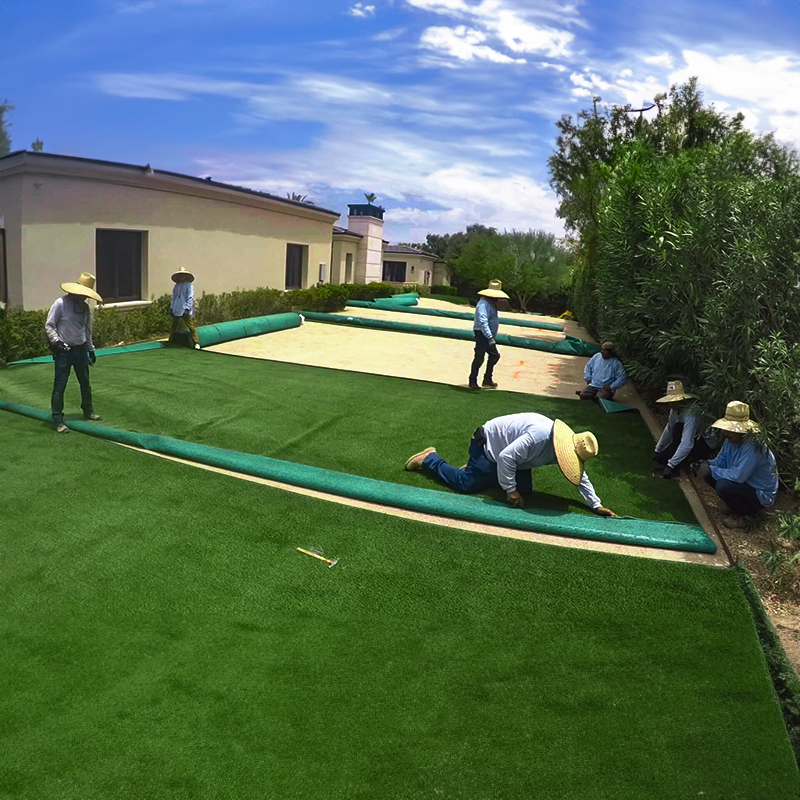
The backing of synthetic grass consists of two crucial parts: the primary backing and the secondary backing. These components collaborate to provide dimensional stability to the entire system. The primary backing is composed of woven polypropylene fabrics that allow the artificial grass fibers to be tufted into rows and facilitate seaming between grass panels. Essentially, it's the robust material to which the grass blades or fibers are stitched. A good backing will resist stretching. The secondary backing, often referred to as the 'coating,' is applied to the reverse side of the primary backing to permanently lock the tufted fibers in place. Together, the primary and secondary backing form the back weight, and a high-quality turf product typically features a back weight above 26 oz. This substantial back weight is crucial for areas expecting heavy foot traffic.
2. Colors: Emulating Nature's Palette
Just as natural grass exhibits a variety of colors, high-quality artificial grass aims to replicate this natural diversity. The inclusion of multiple colors helps mimic the authentic look of real grass. When selecting your artificial grass, opt for a color that closely mirrors the natural grass species in your specific region.
3. Sub-Base: The Unseen Foundation
While not an official part of your artificial grass, the sub-base plays a critical role in your installation's success. Installing artificial grass directly onto soil can lead to dimples and wrinkles as the soil expands and contracts with changing seasons. Therefore, a solid sub-base is essential. This layer typically consists of compacted sand, decomposed granite, river rocks, and gravel beneath the artificial grass. It serves as the foundation for your synthetic turf and ensures proper drainage.
4. Key Specifications to Consider
Now that you're well-versed in the terminology of artificial grass, you can make informed comparisons among different synthetic turf products. Here are some key specifications you'll encounter when exploring synthetic turf options:
Yarn Types: Polyethylene, polypropylene, and nylon are the primary yarn materials used in artificial grass.
Density (Stitch Count): A denser stitch count signifies a higher-quality turf.
Pile Height: The length of the grass blades affects the turf's appearance.
Face Weight: Measures the weight of material per square yard and indicates quality.
Thatch: Additional fibers that replicate the natural inconsistencies of real grass.
Infill: Enhances turf performance, stability, and realism.
5. The Long-Term Value of Artificial Grass
While the initial cost of artificial grass installation may seem significant, it's essential to consider the long-term benefits. Artificial grass pays for itself over time through savings on water and maintenance costs, typically within three to five years. Additionally, it reduces the hassle of mowing, weeding, and fertilizing. It can also increase property values and enhance curb appeal. Many turf companies offer financing options to make your investment more manageable.
6. Choosing the Ideal Turf for Your Needs
The ideal artificial grass product varies depending on your installation area and intended purpose. Consider factors such as:
Expected usage and foot traffic.
Whether it will be used by children or pets.
Desired appearance and lushness.
Endurance against weather conditions.
Resistance to matting and laying flat.
Understanding the Key Components of Artificial Grass for Informed Choices
2023 09/27