

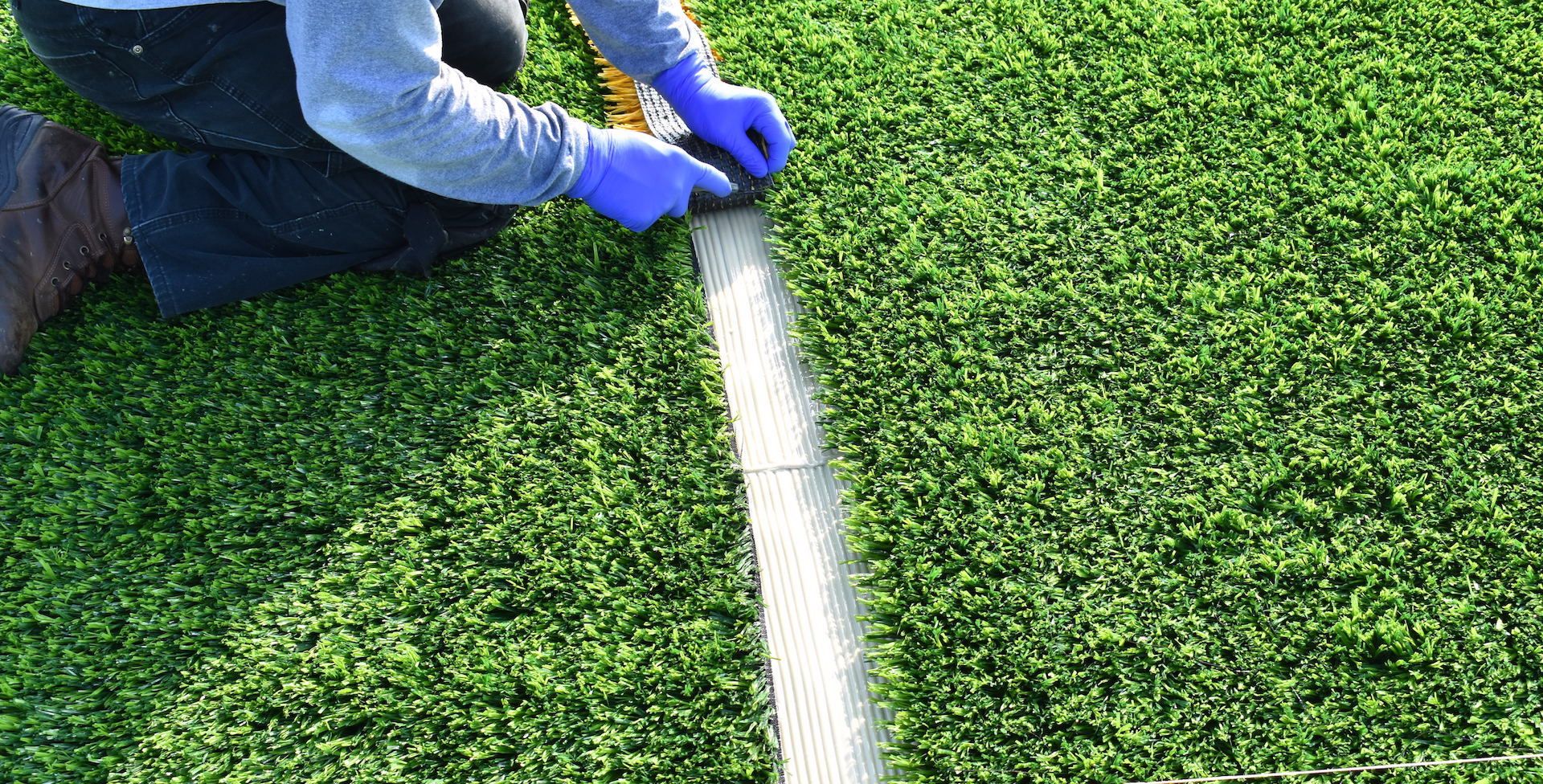
Absolutely! Laying artificial grass on concrete is a fantastic way to breathe new life into your outdoor space. The same method applies to wooden surfaces like decking, as long as the gaps between the boards are small.
Can You Lay Artificial Grass on Gravel?
Yes, you can also lay artificial grass on gravel, provided you ensure good drainage and secure attachment to prevent movement. Simply place your artificial grass on top of the gravel with a layer of smoothed sand in between to create a stable base.
What You'll Need to Lay Artificial Grass on Concrete
Before you begin, gather the following tools and materials:
A sharp knife with spare blades
Tape measure and/or straight edge
Shovel
Joining tape
Gloves and knee pads (or a garden cushion)
A stiff broom
Compactor plate or roller
Artificial grass adhesive
A willing helper
Preparation Steps
1. Assess the Surface: Start by evaluating the condition of the concrete or stone surface. It should be mostly flat, stable, and without major cracks. Cracks wider than 20mm may indicate structural issues and are not suitable for artificial grass installation.
2. Check for Evenness: Small surface undulations are generally acceptable. Larger bumps or depressions may need sand or leveling compounds to rectify.
3. Ensure Proper Drainage: Adequate drainage is crucial. Ensure the surface doesn't retain excessive water. Test drainage by observing how water behaves or using a hose.
How to Lay Artificial Grass on Concrete
Now, let's get into the installation process:
1. Clean the Base: Use a hose, stiff brush, or power washer to thoroughly clean the concrete or stone surface, removing dirt and debris.
2. Address Drainage: If your surface lacks proper drainage, create channels or holes for water runoff. Ensure the surface has a slight gradient for efficient drainage.
3. Lay Foam Underlay: Place a foam underlay on the surface. This underlay serves to smooth minor imperfections and provide a softer feel underfoot. Opt for a foam underlay of at least 5mm, but 10mm thickness is ideal for added comfort.
4. Secure the Underlay: Glue the foam underlay in place and allow it to dry.
5. Install Artificial Grass: Unroll the artificial grass over the surface, leaving about 50mm of overhang on each side. Cut the grass to shape from the back, avoiding cutting through the stitching.
6. Let It Settle: Allow the artificial grass to rest in place for 2-3 hours or overnight if possible to let any creases from storage or transportation smooth out.
7. Apply Adhesive: Apply outdoor adhesive around the edges of the artificial grass and bond it to the base. Ensure there are small gaps (about 20mm wide) in the glue to facilitate drainage.
8. Dry and Brush: Let the adhesive dry according to instructions before walking on the artificial grass. Then, spread sand infill over the grass and use a stiff brush to work it into the pile.
For larger areas, you may need to join two pieces of artificial grass. Follow these steps:
1. Trim the edges of both pieces, ensuring the stitching is close to the new edge.
2. Lay joining tape beneath the seam, covering both pieces of turf.
3. Apply outdoor adhesive to the tape in a zigzag pattern.
4. Push the two pieces of turf together, ensuring no fibers or debris get trapped.
5. Brush over the seam to seal it and allow it to dry.
Now, you're ready to enjoy your new artificial grass surface. Whether it's on concrete, stone, or gravel, this versatile solution can transform your outdoor space with ease.
Please note that while artificial grass offers convenience, it's essential to consider its environmental impact compared to natural grass. Natural grass provides numerous environmental benefits, such as supporting local ecosystems and producing oxygen, making it a more eco-friendly choice.