
It's a well-known fact that artificial grass can heat up significantly under the scorching sun, making it uncomfortable to walk or play on during hot weather. With advancements in technology, cooling infill systems have emerged as a promising solution to combat this issue. But just how effective are these cooling systems in practice?
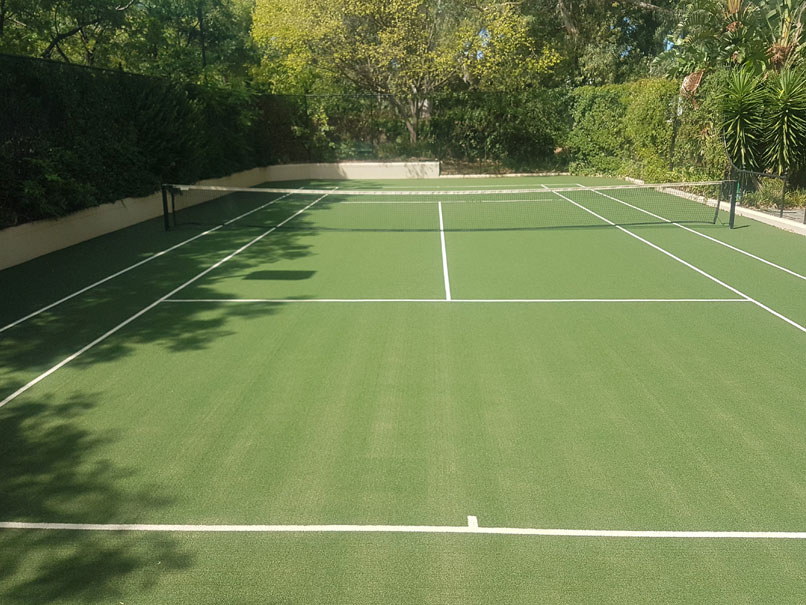
Cooling Infill Systems for Artificial Grass
Many homeowners contemplating the switch from natural grass to artificial grass express concerns about the surface temperature. Traditional artificial grass, composed of various plastic materials, tends to become uncomfortably warm on sunny days. Enter cooling turf infill systems, which have gained attention within the industry. Let's explore some of the available options:
1. HydroChill: HydroChill is a unique pre-coated sand infill designed to keep synthetic turf cooler in hot weather. When exposed to sunlight, it releases stored water through evaporative cooling, resulting in a noticeable temperature reduction. HydroChill claims to lower surface temperatures by up to 50 degrees.
2. T° Cool: Similar to HydroChill, T° Cool incorporates an evaporative cooling system within its coated infill to maintain a cooler surface temperature on warm days. Additionally, T° Cool boasts anti-microbial properties to prevent mold, bacteria, and mildew growth. According to their claims, T° Cool infill can significantly decrease artificial grass temperatures by 35-50 degrees.
The Effectiveness Question
While these cooling turf infills sound promising, their effectiveness may be subject to debate. Both HydroChill and T° Cool require the surface to be rinsed with water to activate the cooling system. Without a substantial water supply, these infills may not deliver the expected cooling benefits.
It's essential to note that the claims of a 35-50 degree temperature drop are typically based on a comparison between a dry artificial lawn with traditional silica sand infill and one that has been generously watered down. In essence, the significant temperature drop observed can largely be attributed to the act of watering the surface rather than the cooling infill itself.
In our view, cooling infills for artificial grass may help maintain a cooler surface temperature for a more extended period after watering, but a substantial portion of the temperature reduction can be attributed to the act of wetting the surface. A similar temperature drop can be achieved when rinsing a surface filled with regular silica sand infill.
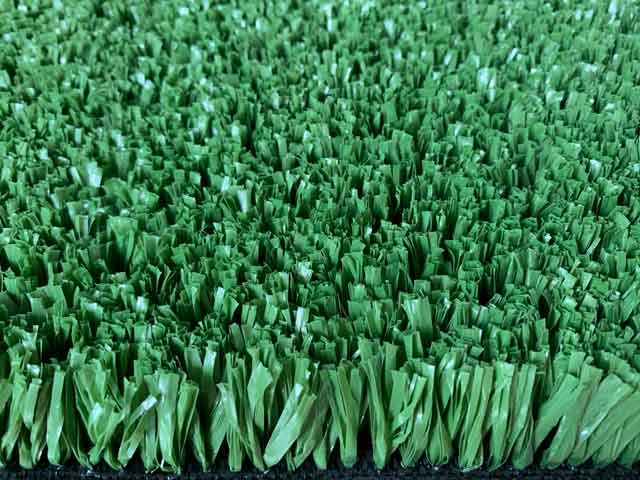
Achieving the Coolest Artificial Turf Surface
If keeping your artificial grass cool is a primary concern, consider the following factors:
1. Density: The density of the artificial grass plays a pivotal role in its overall temperature. High-density turf, while plush and soft, tends to retain more heat due to its heavier and more numerous fibers. Opt for a low-density turf for a cooler surface.
2. Uniformity: Artificial grass with non-directional blades that appear slightly messier tends to stay cooler because it allows for better airflow throughout the grass. Uniform and compact blades restrict air circulation and can lead to increased surface heat.
3. Color Shade: Darker artificial grass, similar to dark clothing, attracts more heat and sunlight. Opt for lighter shades of green if you want a cooler synthetic lawn.
4. Blade Shape: Artificial grass with flat or diamond-shaped blades tends to heat up more under direct sunlight compared to those with a structured or corrugated blade shape. This is because flat blades have a larger surface area exposed to sunlight.
Additionally, providing shade through trees, shade sails, awnings, or umbrellas can significantly contribute to keeping your artificial grass cool on hot days.
In conclusion, while cooling infill systems can have some impact, choosing the right type of artificial grass and implementing shading solutions are key factors in achieving the coolest artificial turf surface possible.